
LatestAI Strategy·4 min read
Why the Most Powerful AI Model Is Usually Overkill
A cheaper AI model just matched a top one at a fifth of the price. The lesson for your business is how much AI power you actually need.
Practical takes on AI-driven project management, training teams on AI, and automation that actually pays for itself.
A cheaper AI model just matched a top one at a fifth of the price. The lesson for your business is how much AI power you actually need.
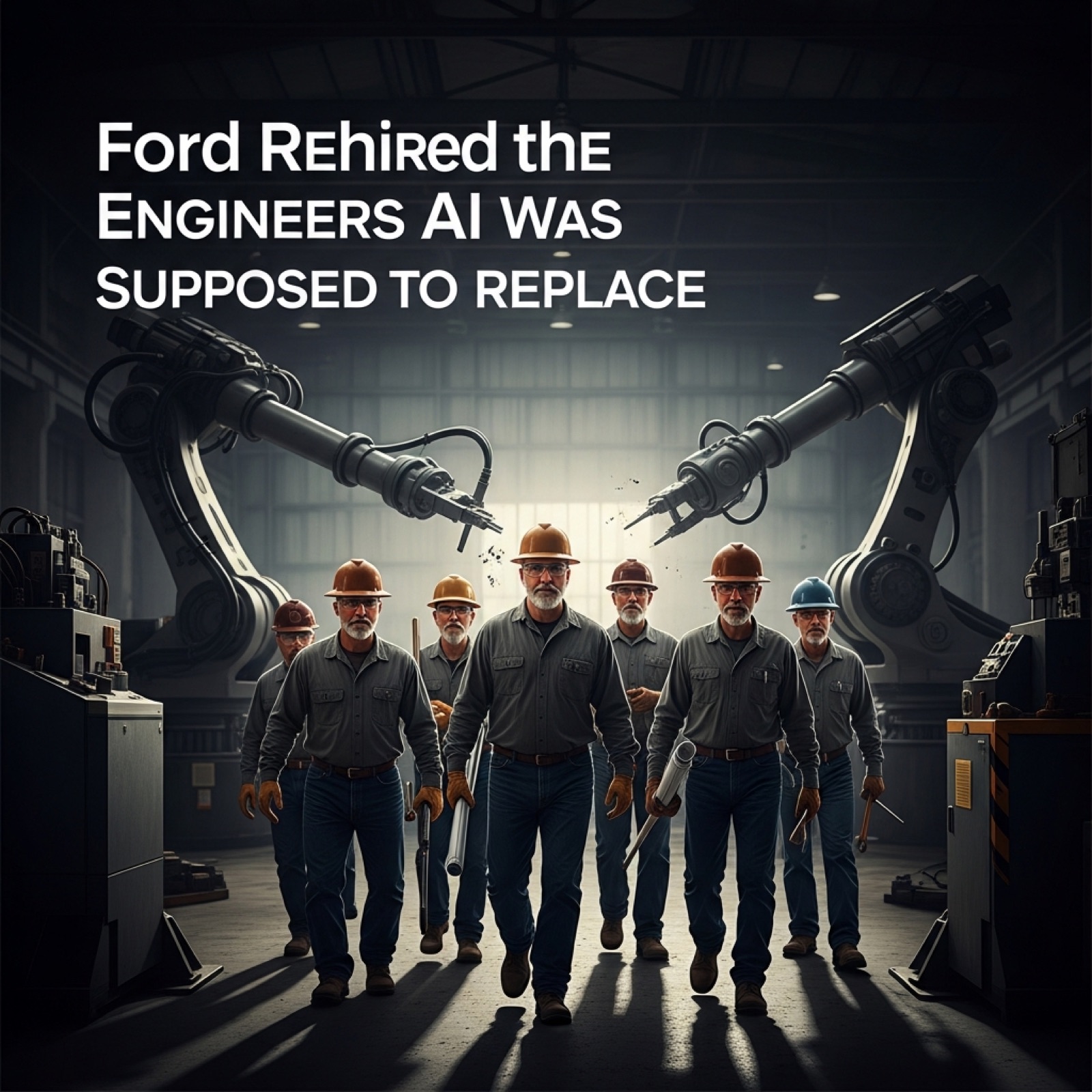
Ford rehired 350 veteran engineers after its automated quality systems fell short. The lesson for anyone automating with AI: know what you're handing over.

Anthropic just made near top-tier AI the cheaper default. The bigger opportunity is re-testing the task you gave up on when the tool was worse.
The tools show up, the way of working never changes, and six months later nobody uses them. I watched this movie for years as an agile coach. We're rerunning it with AI — and the fix is the same.
The average project manager spends hours every week assembling updates from information that already exists in their tools. Here's the workflow that ends it — and the part a human still has to do.
Your team saw the demo, nodded, and changed nothing. That's the normal outcome of most AI training — and it's fixable. Here's what works with people who don't write code.
Meta just put an AI agent inside WhatsApp that talks to your customers directly. Before you switch it on, three checks decide whether it helps or hurts.
The average small business now runs five AI tools, accumulated one at a time. Here is a one-afternoon audit to find the overlap, the risk, and the waste.

ChatGPT now builds a profile of you in the background, no prompting required. Open the memory page and read what your most-used AI tool thinks it knows.

AI tools are quietly trading flat monthly fees for usage meters. Notion and GitHub already moved. Here's how to keep the bill from surprising you.

ChatGPT just dropped below half the AI assistant market. The interesting part isn't who's winning. It's that you finally have a real choice.
BCG surveyed 12,000 workers and found 42% are saving 8 hours a week with AI. Two-thirds don't know what to do with the time. That's fixable.

Anthropic just crossed $47 billion in revenue. Most businesses using AI can't measure their returns. That gap is fixable, but not automatically.

Microsoft's new AI models are already live in PowerPoint, and its new Teams agent will act on your behalf without asking. Neither required your decision.

Apple's iOS 27 will let every iPhone user choose Claude or Gemini by default. If you run a business, that's not a tech story. It's a policy one.

OpenAI filed for IPO this week. The filing reveals it loses $1.22 for every dollar it earns. That number has implications for every business using AI tools.

Anthropic's AI model flagged 23,000 vulnerabilities in software you use every day. Security firms confirmed 1,587 are real. Seventy-five have been patched.

Klarna dropped Salesforce and saved $2M. Then its CEO walked the story back. What actually happened tells you more about AI disruption than the headline did.

AI usage among small business employees is up sharply this year. Confidence in using it fell just as fast. Here's what that gap actually tells you.

Google's new Gemini Spark acts on your behalf without prompting. Before you use it, you need to answer one honest question about your own workflows.

OpenAI raised $4 billion and created a new company just to help enterprises deploy AI. What they couldn't sell without it reveals your problem too.

IBM found 76% of large companies now have a Chief AI Officer. The stat matters less than what it reveals about what's actually hard about AI adoption.

Anthropic's dreaming feature lets AI agents review past sessions and improve. One company saw 6x better results. Here's what that shift means for you.

OpenAI quietly made GPT-5.5 Instant the default ChatGPT last week. The accuracy jump on serious questions changes where AI fits in your workflow.

Stanford's 2026 AI Index shows 70% of businesses use AI but agent deployments are in single digits. Here's why the gap exists and what to do about it.

All five major AI labs just agreed to let the US government evaluate their models before release. Here's why that's a good sign, not a warning sign, for your business.

AI agents can save time, but the real cost is often hidden in data cleanup, permissions, monitoring, maintenance, and workflow ownership.

PwC surveyed 1,200 executives and found 74% of AI's economic gains go to just 20% of companies. The gap is real, and the reason isn't the tools.

AI agents do more than answer questions. Before you automate a workflow, decide what the agent is allowed to read, change, send, and approve.

Avoca, an AI voice agent built specifically for plumbing businesses, just hit $1B valuation. Here is what that says about where AI is heading for small businesses.

Visa opened its payment network to AI agents that can complete purchases without human approval. Here is what that means for how you sell and how you spend.
A startup selling shutdown business data for AI training is a sharp version of a slow-moving trend. Most businesses haven't thought through their exposure.

OpenAI lost two senior leaders last week. It's a useful moment to ask how exposed your business actually is when the AI tools you depend on change.

Claude Design isn't about replacing designers. It's about founders, PMs, and non-technical teams finally closing the gap between vision and validation — if they set the right guardrails.

A practical, step-by-step framework for getting non-technical teams started with AI tools that actually work.

Stop reading hype. Here's actually what AI agents do, when you should care, and when they're just marketing fluff.

AI automation explains how to use AI to do tasks automatically and save your team hours every week.

Most people get mediocre results from AI because of how they ask, not which tool they use. Here's how to fix that in about ten minutes.

Most teams don't fail at AI because of the tools — they fail because no one gave them a clear starting point.

Vibe coding lets you build real software by describing what you want in plain English. Here's what it actually is, whether it works, and if it's useful for small business owners.

I've been using an AI notetaker for six months. Here's my honest take on whether it's worth the cost, which features actually matter, and what I'd tell a small business owner thinking about signing up.
I've been running AI tools into my daily work for over a year. Here's the honest version of what stayed, what didn't, and what made the difference.

Here are the specific AI habits I've built that actually save time. Not theory. What I actually do.

I use all three regularly. Here's an honest breakdown of what each AI assistant is actually good at, where each falls short, and how to pick the right one for your work.

Most AI tools worth using have a solid free tier. Here are the ones I'd actually start with if I were building a small business from scratch today.

Claude isn't just a chatbot. Here's how criminal defense and PI attorneys are actually using it to save hours every week.

AI won't replace your legal judgment, but it will cut your research time in half. Here's what actually works for criminal defense attorneys using AI research tools today.

Most criminal defense arrests happen at night -- here's how small firms automate after-hours intake so they capture every client, even at 2 AM.

Personal injury attorneys spend hours sorting medical records, police reports, and demand letters. Here's how automation can cut that time dramatically.

Most criminal defense attorneys don't realize how much their manual intake process is costing them — in time, in lost clients, and in cases that never get signed. Here's what the numbers actually look like.
Criminal defense and PI attorneys spend hours every week on billing admin. Here's how small law firms are automating time tracking, invoicing, and payment follow-up — without replacing their current software.

Court dates change. Clerks send notices late. Small criminal defense firms can't afford the consequences — and they don't have to. Here's how automated docket monitoring works.

Personal injury firms lose potential clients every week — not because of bad lawyering, but because no one followed up. Here's how automated follow-up changes that.

Most small businesses don't need a massive CRM — they need the right automation layer on top of a simple one. Here's how to set it up without losing your mind.

Small business owners are drowning in repetitive tasks. Here's how AI is actually being used right now — not in theory — to reclaim hours every week without a tech team or a big budget.

Stop compiling spreadsheets every week. Learn how small businesses can build automated dashboards that show exactly what's happening in their business without manual work.

Stop losing new customers to clunky onboarding. Learn how small businesses can automate welcome emails, document collection, and first-week touchpoints without expensive software.

Getting more Google reviews shouldn't require begging. Learn how to automate customer review requests and build your reputation on autopilot.

Still building schedules in spreadsheets? Learn how to automate employee scheduling for your small business, save hours every week, and stop the endless back-and-forth about shift changes.

Stop losing leads to slow follow-up. Learn how small businesses can automate lead capture and response without expensive software or technical skills.

Drowning in emails? This practical guide to small business email automation shows you exactly where to start and what to automate first.

Stop losing leads because you forgot to follow up. Learn how to automate customer follow-up for your small business without losing the personal touch.

Not sure if automation is right for your business? Here are 7 clear signs your small business needs automation to stop wasting time and grow faster.

Agentic AI isn't about chatting—it's about doing. Learn how small businesses can use AI agents to automate real work and save thousands in operational costs.

You don't need a computer science degree or a full-time tech hire to automate your business. Here's how to get started this weekend with zero coding required.

84% of businesses using AI have deployed chatbots. Fewer than 10% are using AI agents. The difference isn't technical jargon—it's the difference between a tool that answers and one that actually works.

78% of businesses now use AI tools. But only 4% have fully automated a single workflow. That's not adoption—that's a very expensive toy.

Everyone's talking about AI agents. Most of them are vaporware. Here are five that deliver real results for small businesses right now.

I've been running an autonomous AI agent on a dedicated Mac Studio for two weeks. Here's what surprised me, what scared me, and why this is a glimpse of what's coming for everyone.

Oracle just committed $50 billion to AI infrastructure. China's models are outperforming American benchmarks. Everyone's panicking about who's winning. But here's what they're missing: when giants fight, everyone else gets cheaper, better tools.

The AI hype machine has created a fog of misconceptions. These five myths are keeping small businesses from the automation wins that actually matter.

Voice AI has crossed a threshold. The technology that handles calls for Fortune 500 companies is now accessible to law firms, medical practices, and local service businesses. Here's what that means for you.

Most businesses are making the same mistake with AI that factories made with electricity a century ago. They're bolting new technology onto old systems and wondering why results are underwhelming.

I test AI tools constantly. Most don't stick. These five have become essential to how I work—both in my day job and running my consulting business.

Your team spends more time on paperwork than you think. Here's how to calculate the real cost—and why AI document processing might be the highest-ROI investment you make this year.

Most AI implementations fail not because the technology doesn't work, but because of avoidable missteps. Here's what I see going wrong—and how to get it right.

The fear of becoming 'robotic' stops many small businesses from automating. Here's how to streamline intake while keeping relationships human.

AI chatbots are everywhere, but the hype often outpaces reality. Here's what small business owners actually need to know before investing.

The real competitive threat isn't artificial intelligence itself. It's the business down the street that figured out how to use it first.